An automatic scooter that accelerates slowly, jerks when pulling away or rattles in the variator cover tells you quite precisely what is wrong. This is the diagnosis: cover off, measure up, and then you know which part is worn out. Replacing and choosing are covered in replacing the drive belt, choosing variator roller weights and replacing the clutch.
Symptom → probable cause
- Slow acceleration, lower top speed — flattened variator roller weights or a narrower, worn drive belt, which then runs too deep in the pulley.
- Jerking or "hanging" when pulling away — clutch linings at the end of their life, tired springs, or belt dust and grease in the clutch bell.
- Rattling or clattering in the cover — worn guide rubbers, play on the variator bush or a bearing in the cover, or rollers that are breaking up.
- Squealing or whistling when accelerating — the belt is slipping: glazed sides, oil on the pulley faces or a belt below the minimum width.
- Already pulls at idle — clutch springs too weak or rusted stuck, or the idle speed is set too high.
- Burning smell and black dust — the belt or linings are slipping; check whether the cooling air inlet of the cover is blocked.
The variator cover off
Scooter on the center stand, engine cooled down, spark plug cap off. The cover bolts are often of different lengths, so lay them down in order. Clean the cooling air hose or grille immediately: if clogged with belt dust, it will overheat the belt. If there is a bearing in the cover, check if it rotates without play or roughness.
The inspection round
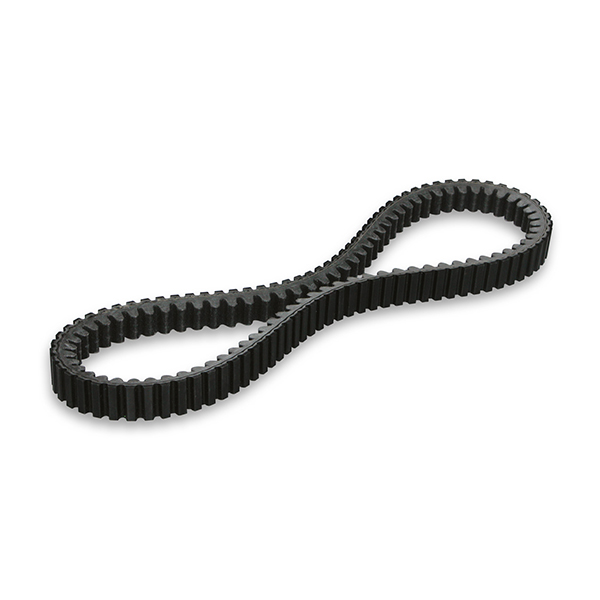
- Drive belt — measure the width at the widest point with a vernier caliper, in several places. Compare with the new size or the wear limit in the workshop manual; on many 50cc belts that is about a millimetre below new. Bend it: cracks between the teeth or hard, shiny sides mean replace, even if the size is still right.
- Variator roller weights — roll them across a flat plate. You feel a flattened side straight away, and rollers that roll angularly stop the variator from shifting through. All rollers in one set should have the same weight and the same diameter.
- Guide rubbers — the sliding blocks that keep the variator ramp plate straight. Worn at an angle or with play, they let the ramp plate tilt, and that is the rattling you hear; they belong with the roller weights as one wear set.
- Variator bush and pulley face — tilt the movable pulley half on the bush. Noticeable play in the bush with its plain bearing is the classic source of rattling at idle. The running surface should be smooth: grooves or blue deposits mean the belt has slipped in it.
- Clutch bell — evenly matt is good, mirror-like patches, grooves or blue discolouration are not. Lightly glazed surfaces you roughen with fine sandpaper in a cross-hatch pattern and then degrease; grooves and blue mean replace. Measure the inside diameter against the limit in the manual.
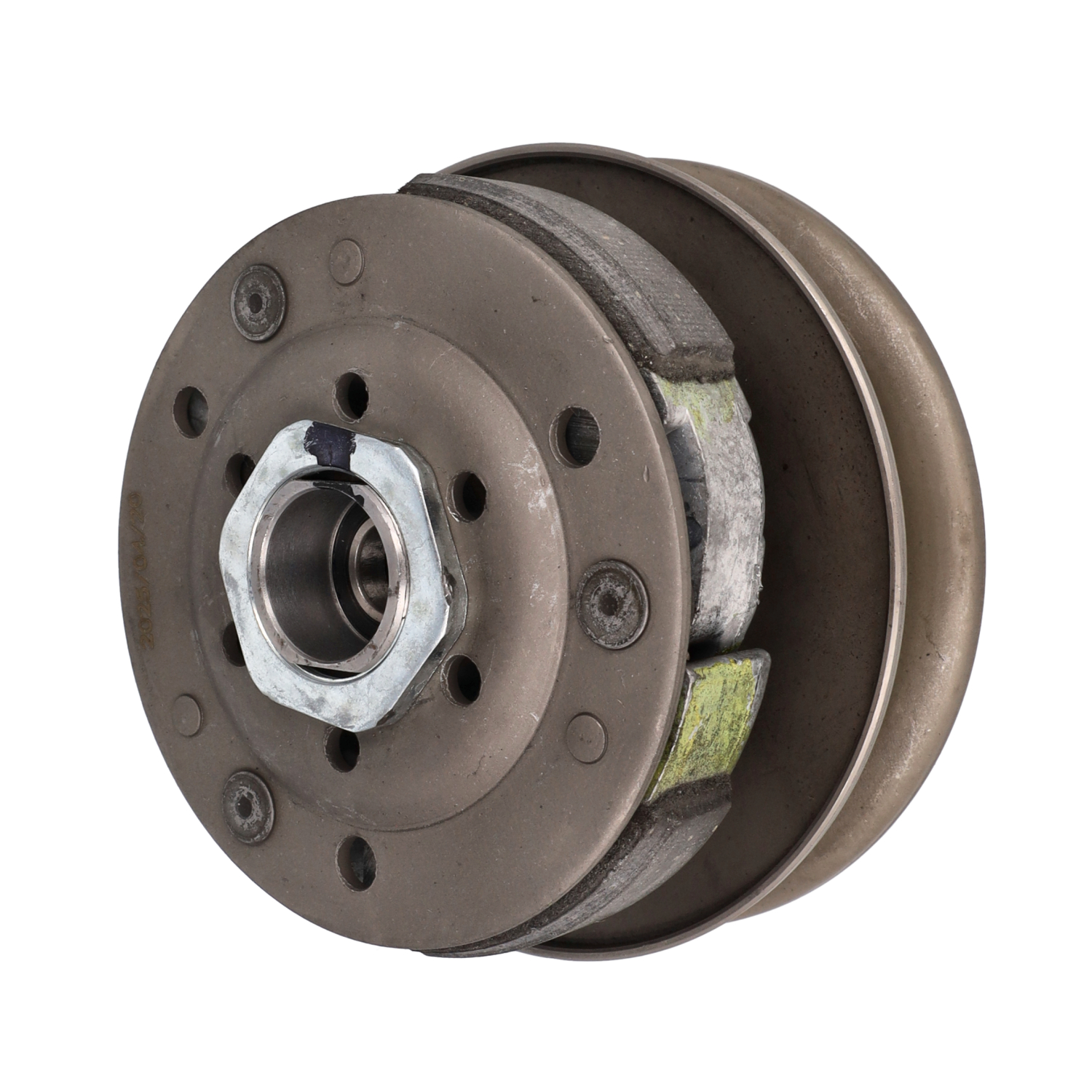
- Clutch linings — measure the thickness at the thinnest point. On many scooter clutches the limit is around one millimetre of remaining lining; the exact value is in the manual. Unevenly worn shoes, lining coming loose or blue-discoloured carriers you replace as a set.
- Clutch springs — they pull the shoes back until the engagement speed. Stretched or broken and the clutch engages too early. Replace them as a set, never a single spring.
- Counter spring and torque drive — the counter spring behind the clutch pulley presses the pulley halves together; compare the free length with a new one or with the dimension in the manual, because a sagged spring gives a low top speed. Turn the pulley half back and forth: the pins in the guide grooves must not rattle and the grooves must not be worn or blue.
- Reassembly — degrease the pulley faces, housing and linings with brake cleaner, fit the belt in the direction marked on it, hold with a holding tool and tighten the variator and clutch nuts to torque. Turn by hand before closing the cover.
The classic mistakes
- Mixing variator roller weights of different weights — imbalance and a variator that doesn't shift cleanly.
- The belt the wrong way round — many belts carry an arrow or print that should face outwards; the wrong way round it wears crooked and quickly.
- Tightening the clutch nut by feel — too loose and it comes off, too tight and the pulley deforms.
- Grease on the linings — makes the clutch unpredictable; lubricate only what the manual mentions and wipe the rest dry.
- Replacing only the visible part — a new belt on flattened rollers or in a glazed bell is soon back to square one.
The right parts straight away
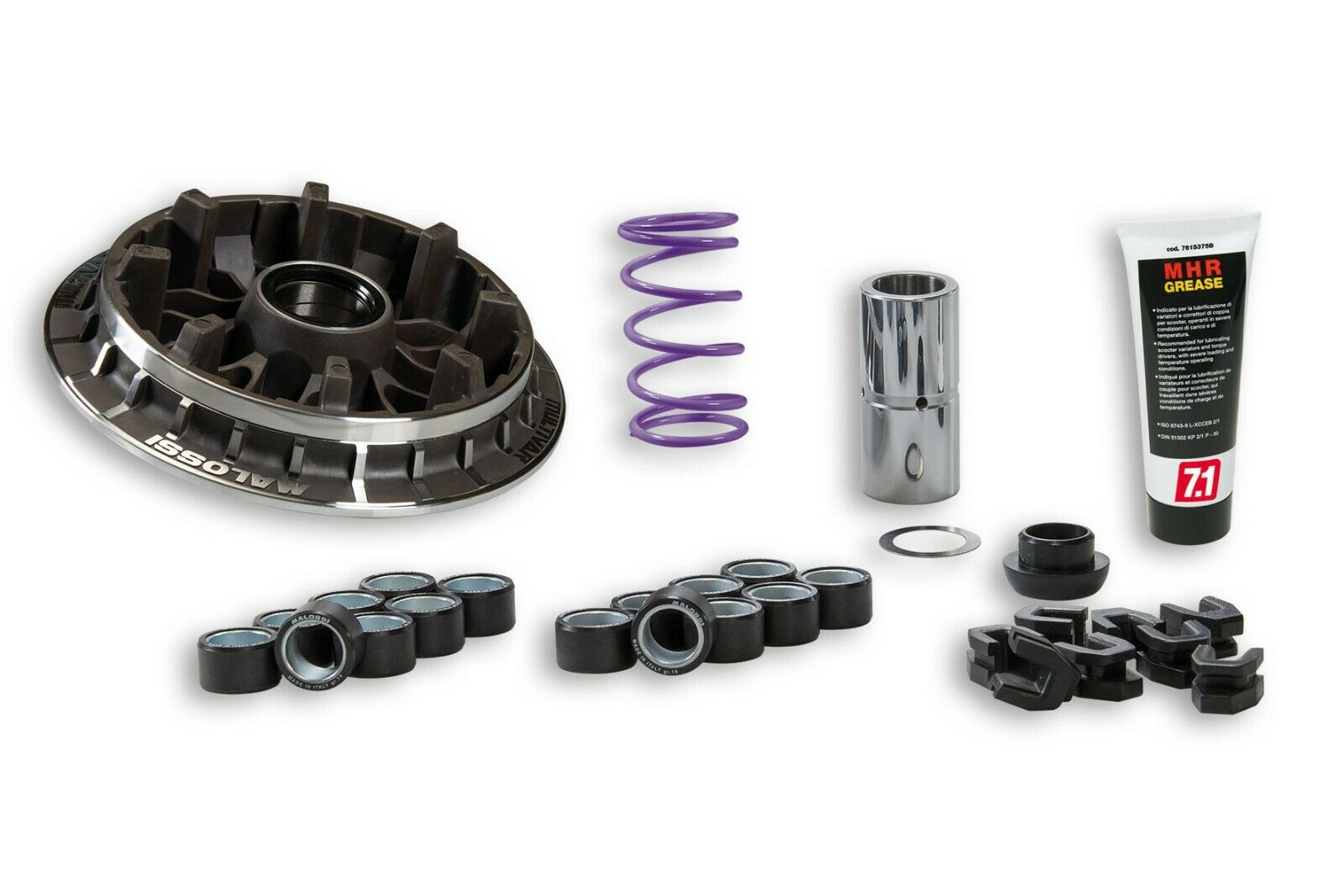
Variator side: drive belts, variator roller weight sets, guide rubber sets, variator bushes, individual variator parts or a complete variator kit. Clutch side: clutches, clutch segments, clutch bells, clutch pulleys and clutch springs — filter on the left by your brand and model. Also: doing the service yourself, tuning and the drive system, the scooter maintenance hub and the FAQ.