Valve clearance is the gap between the rocker arm and the valve stem on a cold four-stroke engine. If it disappears, the valve no longer closes when hot; if it becomes too large, the engine starts to tick. Below you measure and set it step by step, on the common GY6/139QMB engines and on the 4T engines from Piaggio, Vespa, Kymco and SYM.
Why valve clearance matters
Valve, rocker arm and head expand as the engine warms up. The clearance you measure cold absorbs that expansion.
- Too tight — the valve no longer seats when hot, combustion gases flow past and the valve burns. You notice it by loss of compression: it still starts cold, but when warm only with difficulty or not at all.
- Too large — the rocker arm hits the valve stem: a hard, regular tapping. The valve opens later and for a shorter time, and the camshaft and rocker arm wear faster.
When to adjust the valves
- At the interval given in your model's service schedule.
- After running in and after work on the cylinder head.
- For a ticking noise from the top end that follows engine speed.
- If it starts easily when cold but badly or not at all when warm.
Always measure cold: leave the scooter overnight, a lukewarm engine already measures differently.
What you need
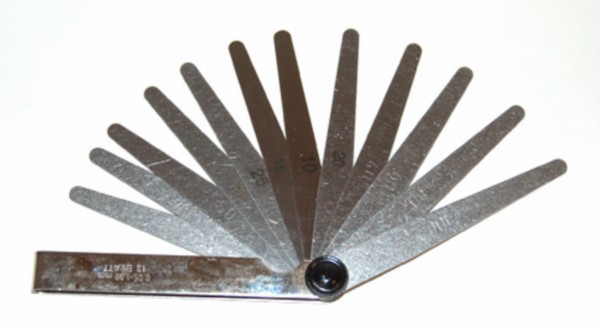
- A feeler gauge with blades of around a tenth of a millimetre, in steps of 0,05 mm or finer.
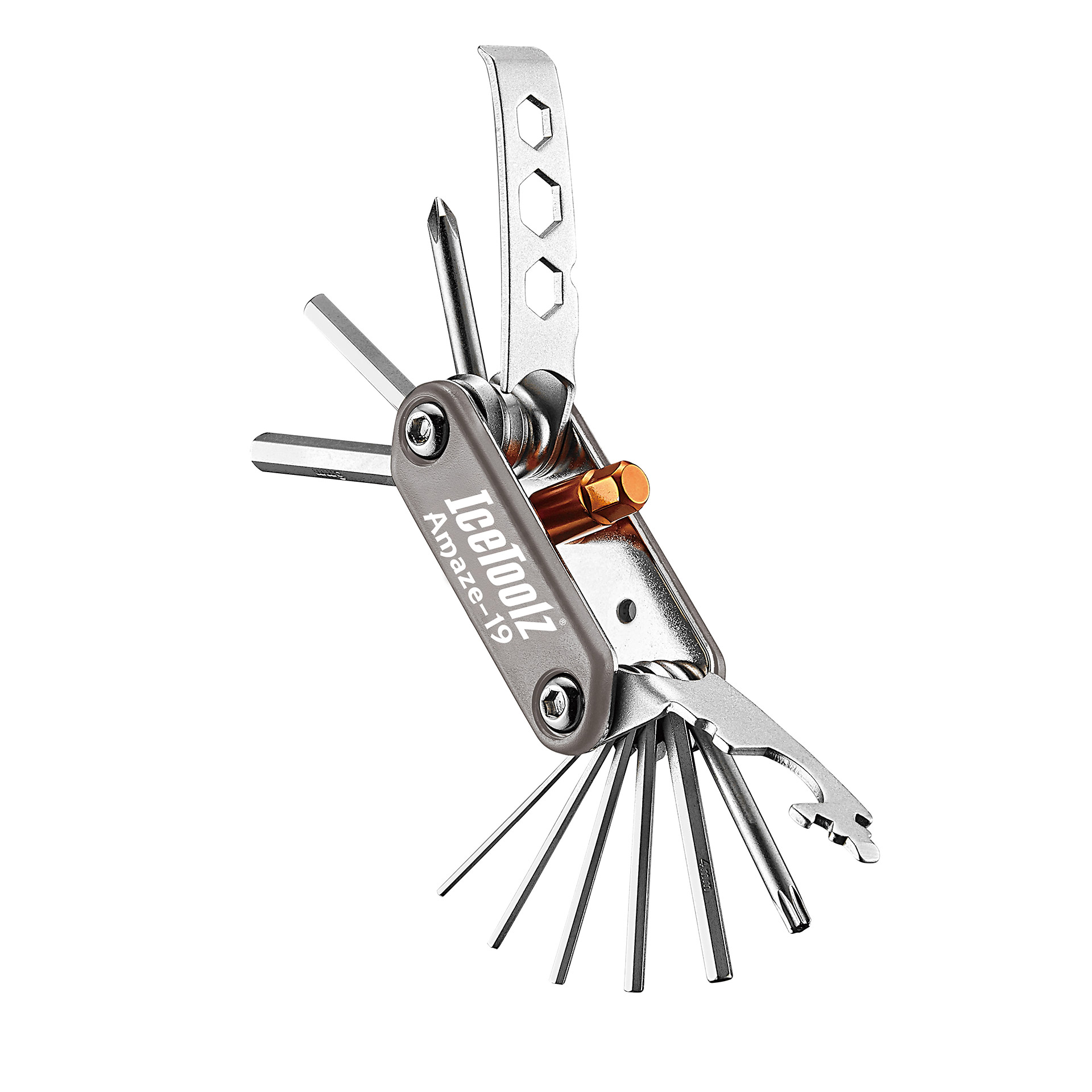
- Spanners for the valve cover bolts and the locknut, and a flat screwdriver.
- A new valve cover gasket, a spark plug spanner and a socket for the flywheel nut.
- The workshop manual for your model, for the specified value and the tightening torques.
Step by step
- Engine cold, ignition off. Remove the seat or side panel until you can access the valve cover and unscrew the spark plug: the block will then turn over easily.
- Remove the valve cover, take off the old gasket and clean both surfaces without scratching them.
- Remove the inspection cap from the flywheel cover and turn the flywheel in its normal direction of rotation until the T mark is opposite the fixed pointer.
- Check that you are on the compression stroke: both valves closed and both rocker arms free, so that you can move them a fraction with your fingers. If one is tight, you are on the overlap: turn one full revolution (360°) until T is showing again.
- Slide the correct blade between the adjusting screw and the valve stem. A light, even drag is correct. If it flaps loose, the clearance is too large; if you have to push, it is too small.
- Loosen the lock nut and turn the adjusting screw in small steps until you feel that drag, with the blade in between.
- Hold the adjusting screw still with the screwdriver and tighten the locknut. Then measure again: the screw almost always turns a fraction as you tighten it.
- Do the same for the second valve; inlet and exhaust often differ.
- Insert new gasket, put cover back on, tighten bolts diagonally and with care — the cover is thin and warps. Put spark plug and cap back on, then start.
On the common GY6/139QMB engines, cold clearance is usually around 0,10 mm intake and 0,10 to 0,15 mm exhaust. That is a guideline for that type, not a general rule: Piaggio, Vespa, Kymco and SYM each prescribe their own clearance per engine. Look up your engine code.
Classic mistakes
- Adjusting on the wrong stroke — at overlap the cam already pushes the valve open, so you measure a fantasy value and set it far too tight. The T mark alone is not enough; two free rocker arms are.
- Not re-checking after the locknut — this is where most ticking or, conversely, too-tight valves come from.
- Adjust warm — a warm head measures tighter, so if you adjust it cold you set it too loose.
- Reusing the old cover gasket — a flattened gasket lets oil run past the head.
Blocks with adjusting shims
Not every engine has an adjusting screw. On the Piaggio 4T-4V engines, among others, the camshaft presses directly on the valve via a cup and the clearance is fixed in the thickness of a valve shim. Measuring is the same; you correct by swapping the shim: new thickness = old thickness plus measured minus specified clearance.
The right parts straight away
You will need a feeler gauge and a new valve cover gasket; if your engine is adjusted with shims, see the valve adjustment shims. If a valve is burnt or oil is leaking past the valve stem, you will find separate intake valves, exhaust valves and valve seals; filter on the left by your brand and model. For the Chinese engines, everything is together on the GY6 page. Further reading: the maintenance schedule for the Chinese scooter, scooter maintenance, which oil you need, scooter won't start and the FAQ.